
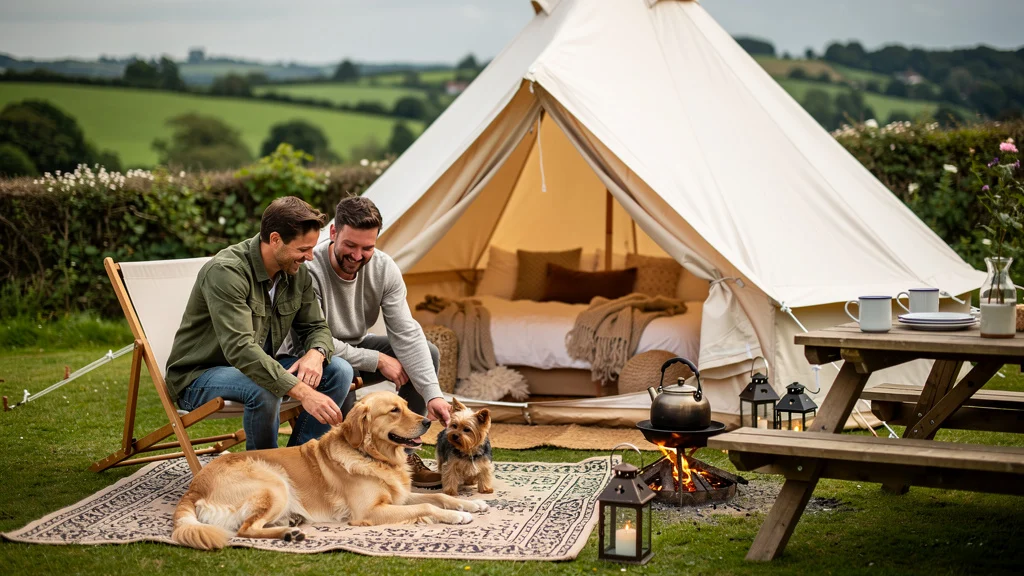
Check the Dog Policy Before You Book Anything
This sounds obvious, but a lot of glamping sites use vague language like ‘dogs considered’ or ‘pets may be permitted’. That is not a yes. Contact the site directly and ask how many dogs they allow, whether there are breed or size restrictions, and what the extra charge is.
Just because you have a pet does not mean you should stay in dingy accommodation, but equally, do not accept being treated as an afterthought. A site that genuinely welcomes dogs will answer those questions without hesitation.
Look for an Enclosed or Fenced Outdoor Space
A bell tent or shepherd’s hut is lovely. Without secure outdoor space, your dog is on a lead the entire stay. That gets tiring for you and frustrating for them.
The best pet friendly glamping sites in the UK offer either a fenced garden attached to the pitch, a private paddock, or at minimum direct access to open countryside where your dog can run off the lead safely. Ask the site specifically what the outside area looks like before committing. Pictures on a website rarely show the full picture.
Know What ‘Dog Friendly’ Actually Means at Each Site
Some sites allow dogs in outdoor areas only. Others let them into the yurt or cabin as long as they stay off the furniture. A small number genuinely treat dogs as guests and provide a bed, a water bowl, and even a local walking guide. Those are the ones worth finding.
When you are reading listings, look for holiday home listings that spell out exactly what dogs are allowed to do, not just that they are allowed to come. The detail tells you everything about how welcome you really are.
Pick a Location With Good Walking Access
Glamping works best when the surrounding area does the heavy lifting. Somewhere with footpaths, woodland trails, or a beach within easy reach means your dog gets proper exercise and you actually feel like you are on holiday, not just parked in a field.
England, Scotland, and Wales all have excellent options. The Lake District, the Pembrokeshire Coast, the Cairngorms, and the Yorkshire Dales all have glamping within or near the national parks. For more ideas on what to do once you arrive, the fun activities to do with your pet on a UK holiday guide is worth a read before you go.
Check the Cancellation and Pet Damage Policy
Most glamping sites take a pet deposit or include a non-refundable pet fee. That is fair. What you want to avoid is a site with no clear policy, because that usually means the cost of any damage is open-ended.
Read the terms before you pay. A reasonable site will have a fixed deposit, a clear refund process if no damage occurs, and a straightforward way to flag any issues on arrival. If the policy is buried or vague, that is worth noting.
Think About Your Dog’s Comfort, Not Just Your Own
A glamping setup that works for you does not automatically work for your dog. Consider whether there is shelter from the sun, shade during warm weather, somewhere for them to dry off after a muddy walk, and whether nearby roads or farm animals might cause stress.
If your dog is sensitive to new environments, it helps to bring familiar items from home. Their own blanket or bed makes a surprising difference in an unfamiliar space. For a broader look at how dogs handle new places, 9 things to know before going pet friendly camping in the UK covers the practical side well.
Do Not Wait Too Long to Book
Good pet friendly glamping sites get fully booked quickly, especially during school holidays and summer weekends. Sites that genuinely welcome dogs are still in the minority, so when a good one opens up, it fills fast.
We allow dogs and we know how hard it is to find somewhere worth staying. The reviews speak for themselves when a site gets it right, and those sites tend to be the ones that are hardest to get into. Book early, confirm the dog policy in writing, and you will have a much better chance of a great time on holiday with your pet.

Comment (0)