
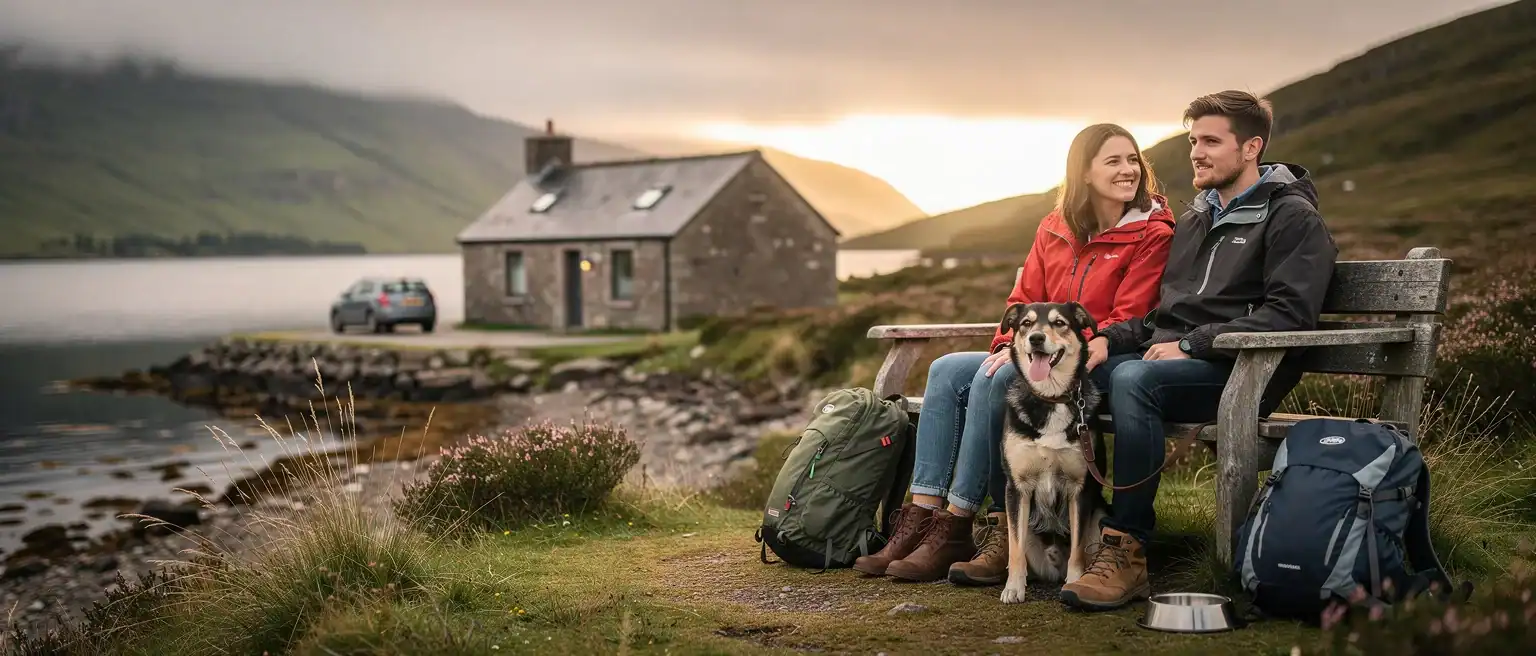
1. Start With What Cheap Actually Means Here
In Scotland’s dog holiday market, a low headline price usually signals one of three things. The dates are restricted, often outside school holidays when demand drops. The site has fewer amenities, so you are paying less because there is less on offer. Or the accommodation technically accepts dogs but the host has not thought much about what that means in practice.
None of those things are automatically dealbreakers. Shoulder season can be a brilliant time to visit Scotland. Fewer amenities matter less if you are spending most of your time outdoors. But going in with clear eyes saves a lot of frustration later.
2. What You Tend to Get for a Low Price
Older static caravans are common at the budget end. They can be perfectly comfortable, but wear and tear shows more quickly in a van that has had years of use and limited refurbishment. Beach access is another variable. Some lower-cost sites sit further inland, which is fine for some dogs but a real loss if your dog lives for a run on the sand.
Peak-season blackouts for dogs are also worth knowing about. A number of Scottish holiday parks block dog bookings during July and August, then market themselves as dog friendly the rest of the year. Check the dates carefully. And some hosts who technically allow pets still make it awkward, with restrictions on which rooms the dog can enter or requirements to leave them outside in all weathers. If you want to know what the caravan experience actually looks like when it is done properly, this guide to dog friendly caravan holidays in Scotland sets out what to look for and what to avoid.
3. Where Scotland Delivers Real Value Without the Drop in Quality
The Solway Coast is worth a close look. It is quieter than the Highland hotspots, the beach access is genuinely good, and it does not carry the same premium price tag as some of the more heavily marketed parts of Scotland. You get open space, coastal walks, and a pace that suits most dogs well.
Value in Scotland is less about finding the cheapest option and more about finding the right operator. A place that genuinely welcomes dogs, has thought about outdoor space, and is honest about what is included will usually cost you less in total than a cheaper booking with hidden fees and reluctant hosts. For a broader look at what works, this real guide to dog friendly holidays in Scotland covers the options in plain terms.
4. What to Check Before You Book Anything
A few things are worth confirming before any money changes hands. Dog weight limits are more common than people expect, and they are not always stated prominently. Extra fees for pets are sometimes buried several pages into the booking terms. Check whether the dog is allowed inside the accommodation or only in an outdoor area, and whether that outdoor space is actually usable rather than a strip of gravel behind the van.
- Is there a weight or breed restriction?
- Are dog fees included or added at checkout?
- Can the dog come inside the van or caravan?
- Is there grass or open space directly accessible from the accommodation?
- What is the cancellation policy if something changes?
Getting answers to these before you book takes five minutes and avoids a lot of problems on arrival.
5. The Trade-Off Between Price and Stress
A booking that costs a little more but genuinely welcomes your dog will almost always work out better than a cheap one with a reluctant host. The friction adds up. Fees you did not know about, being asked to keep the dog out of certain areas, accommodation that is tired and not well maintained. That is not a holiday. It is just a cheaper version of staying somewhere you would rather not be.
One recent guest described the van as immaculate, with everything needed and just pure comfort, without having to contact the owners about a single issue. That is what a well-run place feels like. The reviews speak for themselves, and that kind of feedback does not come from places that cut corners on the welcome.
6. How to Get Good Value Without Cutting the Wrong Corners
Shoulder season is the most reliable way to pay less without sacrificing quality. May, June, and September in Scotland are often excellent for weather and far less busy than peak summer. You get the same beaches and walks for less money, and your dog gets more space to move around.
Look for operators who state their dog policy clearly upfront rather than hedging. Inclusive pricing, where the dog fee is built in rather than added on, is a good sign. It usually means the operator has thought it through rather than bolted on a policy as an afterthought. For practical steps on putting a booking together that actually works, this guide to booking a dog friendly holiday in the UK is worth a read before you commit to anything.
Just because you have a pet does not mean you should stay in dingy accommodation. Cheap does not have to mean that. It just means you need to look more carefully at what you are actually getting.

Comment (0)