
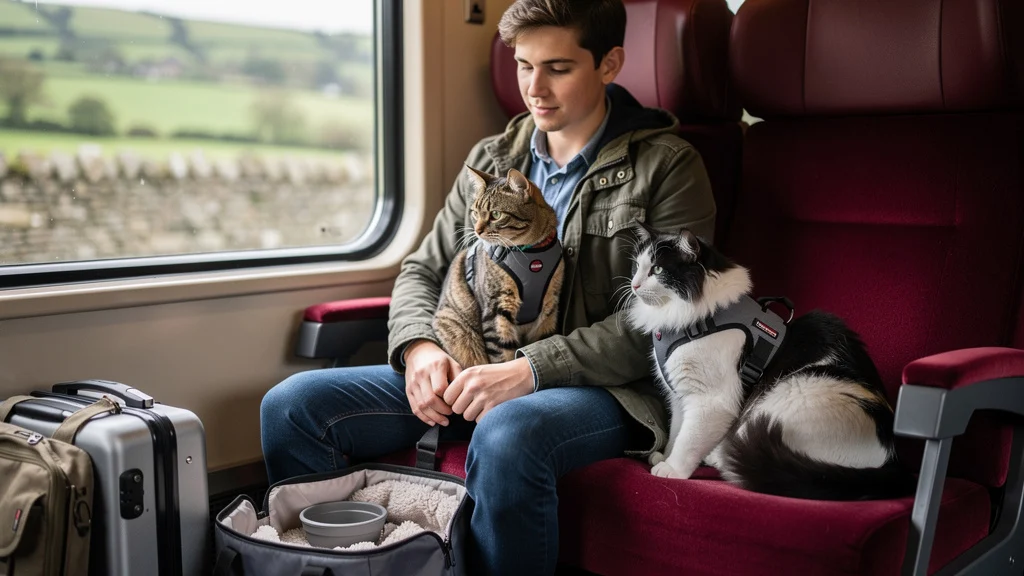
The Carrier Is Everything
Before you think about where you are going, think about the box your cat travels in. A flimsy carrier from a supermarket is fine for a ten-minute vet trip. It is not fine for a four-hour drive to Cornwall. Get something solid with good ventilation and enough room for your cat to stand and turn around.
Leave the carrier out at home for a week or two before the trip. Put a familiar blanket inside. Let your cat walk in and out on their own terms. When travel day comes, the carrier smells like home instead of a threat. That one change makes a real difference to how settled your cat is before you even leave the driveway.
The Drive Itself
Keep the car cool and cover part of the carrier with a light cloth. Cats feel safer when they cannot see everything rushing past the window. Play the radio quietly. Avoid strong air fresheners in the car because cats are sensitive to scent in a way most people underestimate.
Plan stops every couple of hours, but do not open the carrier at a motorway services. You cannot chase a panicked cat across a car park. Keep a travel litter tray, water, and a small snack ready for proper breaks somewhere quieter. Most cats will not eat or drink much during the journey. That is normal. Just make sure water is available when you stop.
If your cat gets genuinely distressed rather than just vocal, speak to your vet before the trip. There are calming options available, including plug-in pheromone diffusers you can use in the accommodation once you arrive. A short conversation with your vet is worth it.
Finding Places That Actually Welcome Cats
This is where most people hit a wall. Dogs get a mention on accommodation listings fairly often. Cats are almost invisible. Many places that say they allow pets mean dogs only, and you only find that out when you email to confirm.
Always contact the property directly before booking. Ask specifically whether cats are welcome, whether there is a secure outdoor space or whether the property is fully indoor-safe, and whether there are any restrictions. A good host will answer clearly. If the reply is vague, that tells you something useful.
Self-catering cottages and caravans tend to work better for cats than hotels. Your cat has one space to get used to rather than shared corridors, lifts, and unfamiliar sounds. You can also set up their litter tray and feeding spot immediately, which helps them settle. For a broader look at holiday home options that work for pets, see the holiday home listings to get an idea of what is out there across the UK.
Settling In at the Other End
When you arrive, put your cat in one room first with the carrier, litter tray, food, and water. Let them come out on their own. Resist the urge to pull them out and show them round. Give them an hour. Most cats will start to explore when they decide they are ready, not when you decide for them.
Bring things from home. Their blanket, their favourite toy, even a worn t-shirt with your scent on it. Familiarity is calming. The surroundings are new but the smell is not, and that matters more than most people realise.
Check the property for escape routes before you let your cat roam freely. Gaps under fences, open windows, cat flaps that back onto a road. Just because you have a pet does not mean you should spend your holiday anxious about where they are. A quick ten-minute walk around the property on arrival saves a lot of stress later.
Days Out When You Have a Cat Back at the Base
Unlike dogs, cats are usually fine being left for a few hours while you head out. Leave fresh water, a clean litter tray, and something to keep them occupied. A window perch or even a chair pulled up to a low window works well. Most cats will sleep while you are gone and greet you at the door with mild indifference.
If you want ideas for activities that work around a pet-based holiday, this guide to fun activities with pets on a UK holiday has practical suggestions, even if your companion has four legs and a very different personality to a dog.
One Thing Worth Remembering
Travelling with cats is not harder than travelling without them. It is just different. The planning takes a bit more thought up front. The journey requires more patience. But watching your cat stretch out in a sunny cottage window somewhere new, completely at home, makes the yowling on the A1 feel like a very small price to pay.

Comment (0)