
What You Are Actually Choosing Between
Camping with a dog in the UK is not one thing. You are choosing between four very different setups, and each one suits a different kind of trip. Tent sites are the most basic option, usually cheaper, and often the most relaxed about dogs because the whole atmosphere is informal anyway. Glamping covers a wide range, from wooden pods with a fire pit outside to fully kitted shepherd’s huts where you get a proper bed and a hot shower, so do not assume glamping means small or basic.
Holiday parks sit in their own category. You get facilities like a shop, a bar, and play areas on site, which works well if you are travelling with kids as well as a dog. Motorhome and touring caravan pitches are the fourth option, and they suit people who want flexibility to move around rather than commit to one place all week. Just because you have a pet does not mean you should stay in dingy accommodation, and across all four formats there are genuinely good places that welcome dogs without making it feel like an inconvenience.
Tent Camping With a Dog: Freedom and the Trade-Offs
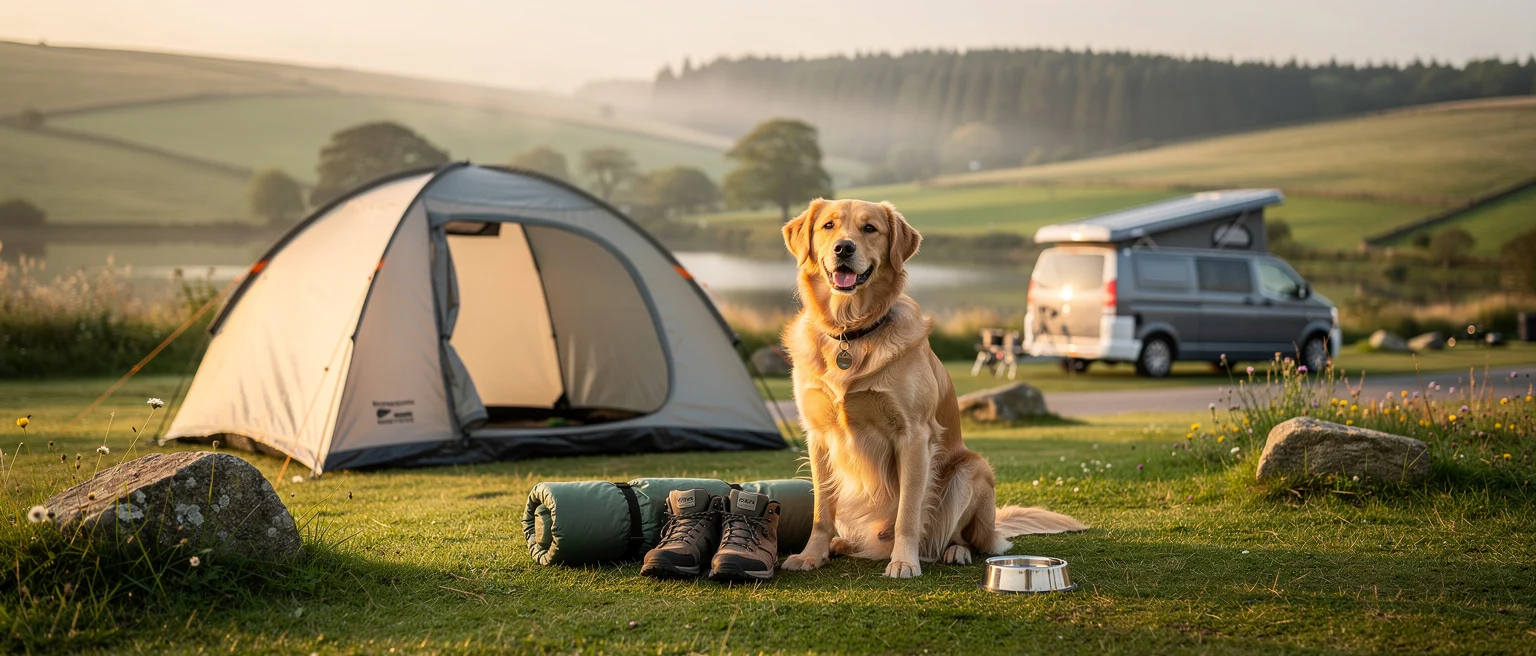
Tent camping gives you and your dog a kind of freedom that most other holidays simply cannot match. You pick the spot, set your own pace, and your dog can be part of every moment rather than left behind in a van or room. Many sites across the UK, from Dartmoor to the Scottish Highlands, openly welcome dogs on their camping fields, and a well-exercised dog who has spent the day on the hills is usually very easy company around a campfire in the evening. If you want to get a proper feel for what works before you book, our guide on 9 things to know before going camping in the UK with a pet covers the practical side honestly.
That said, tent camping does come with real trade-offs worth knowing about before you go. Noise travels easily through canvas, so a dog who barks at every sound in the night will make you unpopular with neighbouring pitches very quickly. Overnight security is the other honest consideration, because a tent offers no real barrier if your dog panics during a storm or spots something worth chasing at 2am. A good ground anchor or a tethering stake close to your sleeping area helps enormously, and keeping your dog’s familiar bedding inside the tent settles most dogs down faster than anything else.
Holiday Parks: More Rules, More Comfort, Easier Logistics
The big operators like Parkdean, Haven, and Butlin’s all say they allow dogs, but there’s a real difference between ticking a box and genuinely welcoming your pet. Parkdean and Haven both permit dogs on site, though the detail matters, most parks cap the number of dogs per unit at two, restrict certain breeds, and charge a nightly dog fee on top of your booking. Some pitches and lodges are dog-free zones entirely, so you can find yourself paying a premium and still watching where you walk. The logistics are generally easier than wild camping, with proper facilities and on-site help, but that comfort can come with a layer of small-print that catches people out.
Haven tends to be slightly more straightforward about where dogs can and can’t go, and their dog-walking routes on larger parks are a genuine plus for owners who need to burn off a lively dog before breakfast. If you want to understand what you’re actually signing up for before you book, our dog friendly caravan holidays UK guide breaks down the day-to-day reality across different site types. Just because you have a pet, does not mean you should stay in dingy accommodation, and the good news is that the better holiday parks are slowly getting that message.
Glamping With a Dog: Worth the Cost or Just a Prettier Compromise?
Glamping pods, shepherd huts and bell tents cost more than a standard pitch, sometimes two or three times as much per night. For dog owners, though, that extra spend can make a real difference. A solid-walled pod with its own enclosed decking, for example, gives your dog somewhere safe to settle outside without you worrying about them wandering into neighbouring pitches. You’re not roughing it, and neither is your dog. Just because you have a pet, does not mean you should stay in dingy accommodation, and a well-chosen glamping setup proves exactly that.
The honest caveat is that not every glamping site openly welcomes dogs the way they should. Some allow them in bell tents but not pods, others charge a hefty additional fee on top of an already high nightly rate. Before you book, check exactly what’s included and whether the site has secure outdoor space your dog can actually use. If you want a broader look at what to expect before committing to any camping setup, 9 things to know before going pet friendly camping in the UK is a good place to start. The right glamping spot gives you the freedom to holiday with your pet properly, not as an afterthought.
Motorhome and Campervan Sites: The Case for Flexibility
Travelling by campervan or motorhome changes the whole dynamic of a holiday with a dog. Your pet has one consistent space to sleep, eat, and settle into, and you are not relying on someone else’s accommodation to actually welcome you when you arrive. Sites like Castle Cove in Wales and Bellingham Camping in Northumberland we allow dogs as a matter of course, not as a grudging exception bolted onto the booking terms. That kind of straightforward welcome makes a real difference when you are planning where to stop.
Before you book any site, it is worth checking a few practical things. Most good sites will tell you clearly how many dogs are allowed per pitch, whether they need to be kept on a lead across the site, and whether any areas are off limits. Some sites have dedicated dog walk routes or access directly onto open countryside, which is genuinely useful after a long drive. If you want a broader look at what to expect before you arrive anywhere, 9 things to know before going camping in the UK with a pet covers the ground worth covering. The reviews speak for themselves when a site is doing this properly.
The Criteria That Actually Matter When You Have a Dog
Not every camping site that says it allows dogs actually makes life easy for you once you arrive. The five things worth checking before you book are secure perimeter fencing, the quality and length of walks within a short drive, the number of dog waste stations on site, the overnight noise policy for animals, and the general attitude of the staff toward dogs. That last one matters more than people expect. A site where the warden waves your dog over for a pat is a very different experience from one where the welcome mat is pulled in as soon as they clock the lead in your hand. We allow dogs because we want you here, and the best sites share that same outlook.
When you are sizing up a new site, look at the reviews and pay attention to what dog owners specifically mention. If several guests mention muddy pitches with no rinse-off point, or a rule that dogs must stay in the tent after nine at night, those are real signals worth acting on. Our guide on what to know before going camping with a pet runs through these practical questions in more detail, so you can apply the same thinking to any site you find across the UK. The reviews speak for themselves, and the same is true in reverse.
How to Find the Right Spot and Book With Confidence
Start by searching specifically for sites that openly welcome dogs, not ones that add a small print footnote about pets being tolerated. There is a real difference between a campsite that allows dogs and one that actually caters for them, and you notice it the moment you arrive. Ask before you book whether dogs can stay in the tent or caravan with you overnight, whether there are on-site restrictions by breed or size, and whether the surrounding area has decent walking routes. One practical tip worth remembering is to check what other dog owners say about a specific site, not just the general star rating, because a family traveller and a dog owner often want very different things from the same place. If you want somewhere to start, our guide on what to know before going camping in the UK with a pet covers the questions most people forget to ask until it is too late.
Reading real reviews from other dog owners saves a lot of wasted journeys. Someone who turned up with a Labrador and left after one night will tell you far more than a polished website description ever will. The reviews speak for themselves when a site genuinely delivers, and when they do not, owners are equally honest. Book early for peak weeks because the best spots that allow dogs fill up fast and are fully booked well before summer arrives.

Comment (0)