
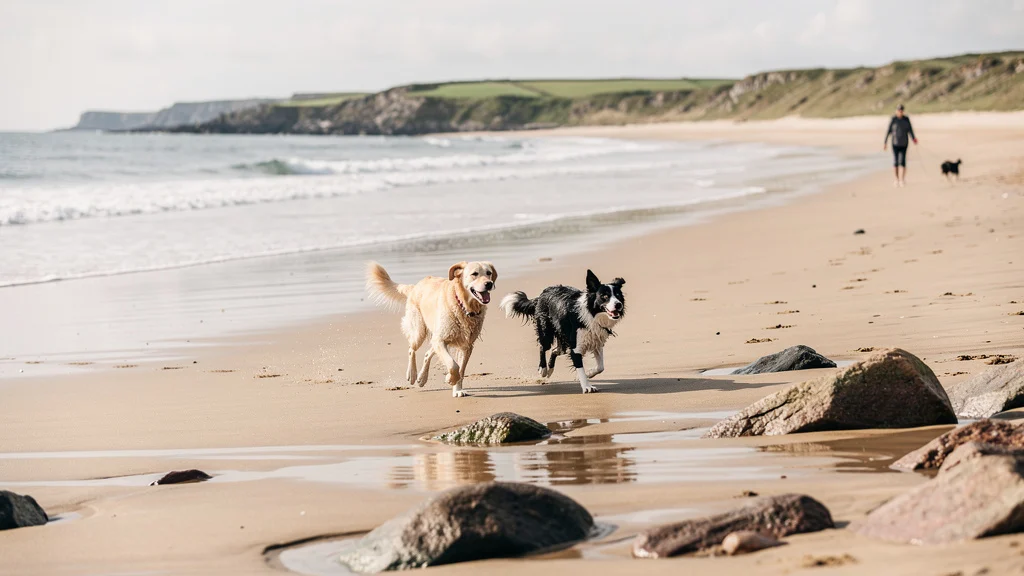
The Biggest Myth: All Scottish Beaches Are Open to Dogs All Year
This one catches people out every single summer. Scotland has thousands of miles of coastline, and the scenery is genuinely hard to beat. However, local councils control beach access rules, and those rules vary quite a bit from one stretch of sand to the next.
Many popular beaches introduce seasonal dog restrictions roughly from Easter through to September or October. These are often the busiest family beaches, so it makes sense. The problem is that plenty of people only discover the ban when they arrive with their dog and see the signs. A quick check before you travel saves a lot of bother.
Beaches That Consistently Welcome Dogs
Some beaches have earned a real reputation among dog owners for getting it right. Here are a few worth knowing about.
Seacliff Beach, East Lothian is a quieter spot that sees far fewer visitors than the more famous stretches nearby. Dogs are welcome, the sand is clean, and the ruins of Tantallon Castle sit just up the road if you fancy extending the day out.
Sandwood Bay, Sutherland is one of the most remote beaches in the UK. It takes roughly an hour on foot to reach it from the car park, but that walk is genuinely rewarding. Because it sits so far off the beaten track, you will rarely share it with more than a handful of other people. Dogs love it.
Yellowcraig Beach, East Lothian sits near Dirleton and allows dogs throughout the year. There is a car park, open space for a good run, and views across to Fidra island. It is a reliable choice when you want somewhere that works without fuss.
Coldingham Bay, Scottish Borders is another solid option. It is a small, sheltered cove with enough space for dogs to move around freely. Because it is slightly off the main tourist trail, it stays calmer than some of the bigger named beaches.
What the Seasonal Rules Actually Mean in Practice
Seasonal restrictions usually apply between roughly May and September, though exact dates vary by council. The restriction is almost always about specific zones on the beach, not the entire coastline. So a beach might ban dogs from the main swimming area but leave a long stretch of shoreline completely open.
The honest advice is this, check the local council website for the beach you plan to visit before you travel. It takes two minutes and removes any doubt. Most councils publish clear maps showing exactly which areas are restricted and during which months.
Just because you have a pet does not mean you should avoid the best spots. It just means a bit of planning goes a long way.
What to Watch Out For Beyond the Rules
Rules are only part of the picture. A few other things make a real difference to how the day goes.
- Tides. Scottish beaches can change quickly. A wide open strand at low tide becomes a narrow strip a few hours later. Check the tide times before you plan a long walk.
- Wildlife. Some beaches are close to seal colonies or nesting bird areas, especially in spring. Keeping your dog under close control in these spots is not just common sense, it is often a legal requirement under Scottish wildlife law.
- Parking. Remote beaches often have limited parking, and some charge a fee. Arriving early in peak season makes the whole thing easier.
Planning a Longer Trip Around the Beaches
If you want to make a proper trip of it, Scotland rewards that approach. You can build a few days around a collection of beaches, especially in Fife, Argyll, or the East Lothian coast, where good dog-welcoming spots sit close together.
Pairing beach visits with other activities, forest trails, hills, or coastal villages, keeps things interesting for both you and your dog. For more ideas on dog friendly holidays in Scotland, there is a full guide worth reading before you start planning.
Accommodation matters too. Some places still treat dogs as an afterthought or pack you off to somewhere you would rather not stay. We allow dogs as a genuine part of the offering, not as a reluctant exception. Just because you have a dog does not mean you should settle for less. We are not cheap, but the reviews speak for themselves.
If you are looking at dog friendly caravan holidays in Scotland, that guide covers what to look for when comparing parks and pitches.
The Short Version
Scotland has some of the finest beaches in the UK, and plenty of them welcome dogs properly. The key is knowing which ones, understanding the seasonal rules, and checking before you go. Do that, and you are set up for a great time on holiday with your dog beside you.

Comment (0)