
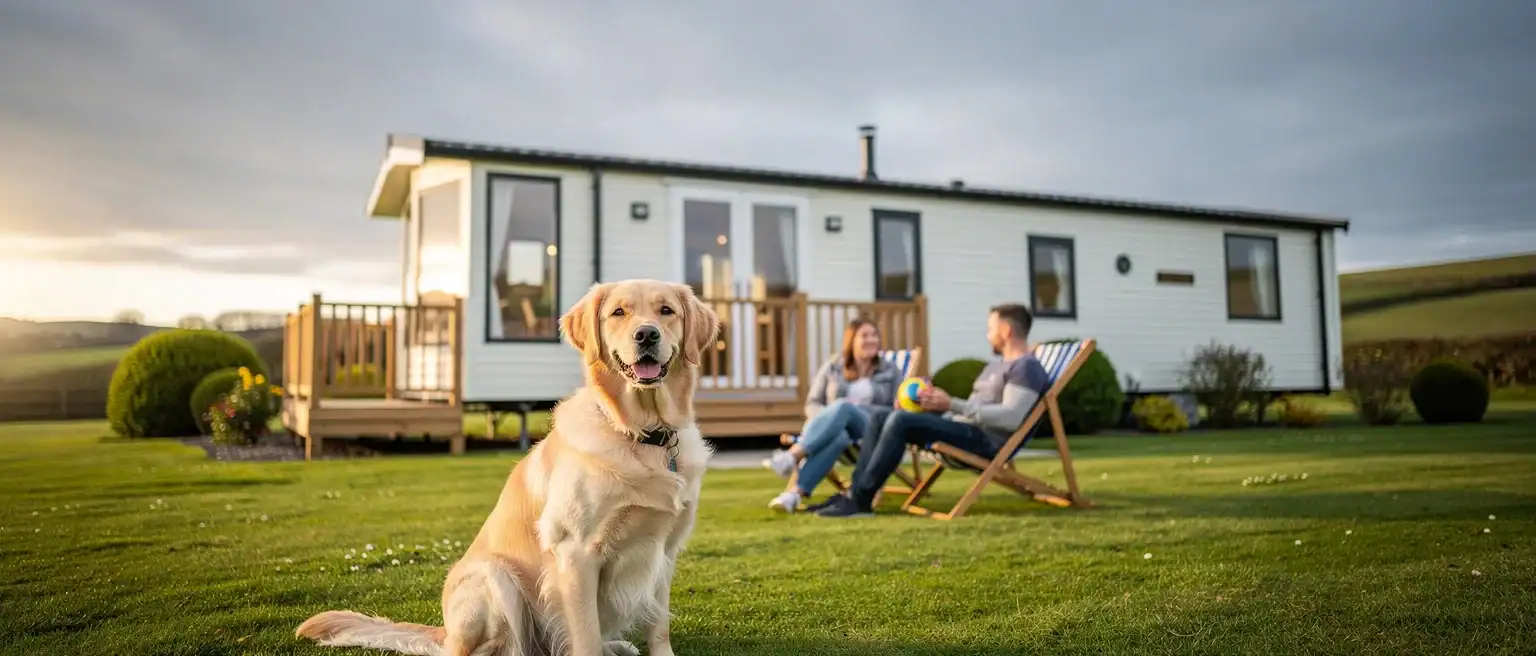
What a Dog Friendly Caravan Holiday Actually Means
“Dog friendly” covers a wider range than most people realise, and the difference between one end of that scale and the other can make or break a trip. At the cautious end, you get a site that technically allows one small dog under 10kg, charges a nightly pet supplement, expects the dog to stay off all soft furnishings, and asks you to keep it crated whenever you leave the van. That is not really a welcome, it is a reluctant exception dressed up in marketing language. At the other end, you get a place that openly invites dogs, provides bowls or towels, does not penalise you financially just for bringing your pet, and treats the animal as a normal part of your family rather than a liability.
Before you book anywhere, it pays to ask a few direct questions rather than rely on a small dog icon on a listings page. Find out how many dogs are allowed and whether there are breed or size restrictions, because some sites ban larger breeds outright without advertising that clearly. Ask whether dogs are permitted inside the caravan unsupervised, since plenty of “dog friendly” parks still prohibit this, which makes a day out almost impossible. Check whether there is a dedicated exercise area or easy beach and trail access nearby, because a dog cooped up in a van with no outlet is nobody’s idea of a good time. The clearest sign that a place genuinely welcomes dogs is when the owners have thought about these things before you had to ask, and the answers are already on the listing or answered without hesitation when you ring.
How to Pick the Right Park for Your Dog
Most parks advertise themselves as dog friendly, but the fine print tells a different story. Before you book, ask directly about weight limits and breed restrictions, because some parks refuse dogs over a certain size or ban specific breeds outright, and that policy rarely appears on the main booking page. Ask how many dogs you can bring, whether they must stay on a lead at all times across the whole park, and whether dogs are allowed inside the caravan or only in an outdoor run. A quick phone call before handing over a deposit can save a lot of disappointment on arrival day. For anyone researching where to stay, reading through a guide to dog friendly caravan holidays in Scotland gives a honest sense of what the better parks actually look like in practice.
Outdoor space matters more than most listings let on. Look for parks that have a dedicated exercise field or a dog walk within easy reach of your pitch, not just a strip of grass near the car park. Check whether there are water tap points outside so you can rinse muddy paws before coming back in, and ask whether the site charges a separate dog fee on top of the pitch price. Some parks bundle it in; others add a nightly fee per dog that can quietly push up your total cost. If the park cannot answer these questions clearly, that itself tells you something. The parks genuinely set up for dogs will have straightforward answers ready, because they deal with exactly these questions every week.
What to Pack for Your Dog on a Caravan Trip
Caravan storage is tight, so the goal is bringing what your dog genuinely needs and leaving out the rest. Start with the basics your dog already uses at home, their own food and water bowls, enough food for the full trip plus a day extra, any regular medication, and a familiar blanket or bed. That last one matters more than it sounds. A dog settling into an unfamiliar space will anchor to a scent they recognise, and a blanket from home can calm the first night far quicker than anything else. A short lead for site rules and a longer one for beach or open ground both earn their space, as does a good supply of poo bags.
Beyond the basics, a few caravan-specific items make a real difference. A portable water bottle with a built-in bowl means you can hydrate your dog mid-walk without unpacking anything. A microfibre towel dries muddy paws fast and takes up almost no drawer space. If your dog is prone to car sickness, speak to your vet before the journey, as a single tablet can spare everyone a miserable first hour. It is also worth packing a spare collar with your contact number on the tag, since dogs can become disoriented in new places and a working ID tag is your first line of defence if they slip the lead. For more ideas on where to take your dog once you arrive, the dog friendly caravan holidays in Scotland guide covers what to expect at park sites and coastal spots across the country.
Keeping Your Dog Safe and Settled in a Caravan
Most dogs show some first-night nerves in a caravan, and that’s completely normal. A new space means new smells, unfamiliar sounds from neighbouring pitches, and a sleeping arrangement that feels nothing like home. The best thing you can do is bring something that already smells of your dog, a favourite blanket, a worn t-shirt, or their usual bed if it fits. Dogs settle faster when they have one corner of the caravan that belongs to them. Give them time to sniff around before you expect them to lie down and relax.
If your dog travels in a crate at home, bring it. Caravans are smaller than most rooms, so a crate gives your dog a clear boundary without taking over the whole space, and it keeps them safe if you need to step out for an hour. For dogs that don’t crate, a dog guard or a short tether clipped to a fixed point works just as well, provided they can still reach water and move enough to get comfortable. If your dog tends toward anxiety in new places, keep the first day low-key. A calm walk around the park before any big beach adventure helps them read the new environment at their own pace. You can read more about what to look for in dog friendly caravan holidays in Scotland if you want a practical breakdown of what well-run sites actually offer for dogs. The goal is simple, a dog that feels settled eats, sleeps, and behaves far better for the rest of the trip, which means a better holiday for everyone in the van.
The Best Regions in the UK for Dog Friendly Caravan Breaks
The UK has no shortage of places where dogs and caravans go together well, but some regions make the whole thing noticeably easier. The southwest of England, Cornwall in particular, is a strong choice. There are long stretches of beach that allow dogs outside the peak summer months, coastal paths where a dog can walk for miles, and caravan parks dotted right along the edge of the land. Norfolk is another one worth serious consideration, with the Broads, wide open heathland, and quieter beaches that stay accessible to dogs for more of the year than most people expect. Both regions give you somewhere to stay that feels relaxed, not like you are being managed out of every space.
Scotland opens up a different kind of trip. The Highlands offer scale that most of England and Wales simply cannot match, with vast glens, forest tracks, and loch shores where a dog can cover real ground without hitting a fence or a sign telling you to keep them on a lead. Pembrokeshire in Wales sits at the other end of the scale but punches hard for variety, with rugged coastal paths, sheltered coves, and a national park that makes it straightforward to build a full week around walking and the outdoors. The north of England also deserves a mention, with the Lake District and Northumberland both offering the kind of scenery and open space that makes a caravan holiday feel like a proper break rather than just somewhere to sleep. If you want to explore what is available across these areas, the dog friendly caravan holidays in Scotland guide covers the Scottish options in more detail and is worth reading before you book.
Rules and Costs Most People Miss Before They Book
The headline price on a dog friendly caravan holidays UK search rarely tells the full story. Most parks charge a pet fee on top of your base rate, typically somewhere between £10 and £30 per dog per stay, though busy peak weeks at coastal parks can push that higher. Some sites also take a refundable damage deposit at check-in, anywhere from £50 to £150, which you only get back once the van has been inspected. If you’re travelling with two dogs, both charges often double, so it pays to ask the specific question before you confirm your booking rather than after you’ve already paid a non-refundable deposit on the accommodation itself.
Lead restrictions catch a lot of first-timers off guard too. Most parks operate lead-only rules across the whole site, meaning your dog never gets to run free on park grounds regardless of how quiet it is. Dedicated off-lead areas do exist at some sites, but they’re the exception rather than the rule, and they’re rarely advertised clearly on the main booking page. Many parks also restrict dogs from indoor facilities like reception, clubhouses, and on-site restaurants entirely, which matters if you’re planning a holiday where the kids want to use the pool or the evening entertainment. If you want to understand what genuinely dog-welcoming accommodation looks like before you browse listings, our guide to dog friendly caravan holidays in Scotland walks through what good looks like in practice. Reading the pet policy page in full, not just the headline “dogs welcome” badge, is the single best thing you can do before you commit to any booking.
Making It a Great Trip, Not Just a Manageable One
Too many dog owners spend their holiday managing their pet rather than actually enjoying time with them. The shift happens when you stop treating the dog as a logistical problem to solve and start building the itinerary around what they love. If your dog goes wild on a beach, find a park near one. If they prefer woodland trails, look for sites with forest walks on the doorstep. A caravan park near the Pembrokeshire coast, for example, puts you within reach of miles of dog-friendly beaches where your dog can run flat out while the family walks alongside. That kind of day leaves everyone genuinely tired and happy, which is what a proper holiday should feel like.
The park itself matters more than most people expect before they book. A site that openly welcomes dogs, rather than tolerating them as a reluctant afterthought, makes a real difference to how relaxed the whole stay feels. You are not constantly second-guessing the rules, apologising at reception, or keeping your dog hidden away. When you find a place where dogs are genuinely part of the welcome, the holiday opens up. If you are browsing options across the UK, dog friendly caravan holidays in Scotland offer a good example of how location and attitude combine to create something worth travelling for. Plan around your dog, pick a site that means it, and the difference between a manageable trip and a great one becomes obvious from the first morning.

Comment (0)