
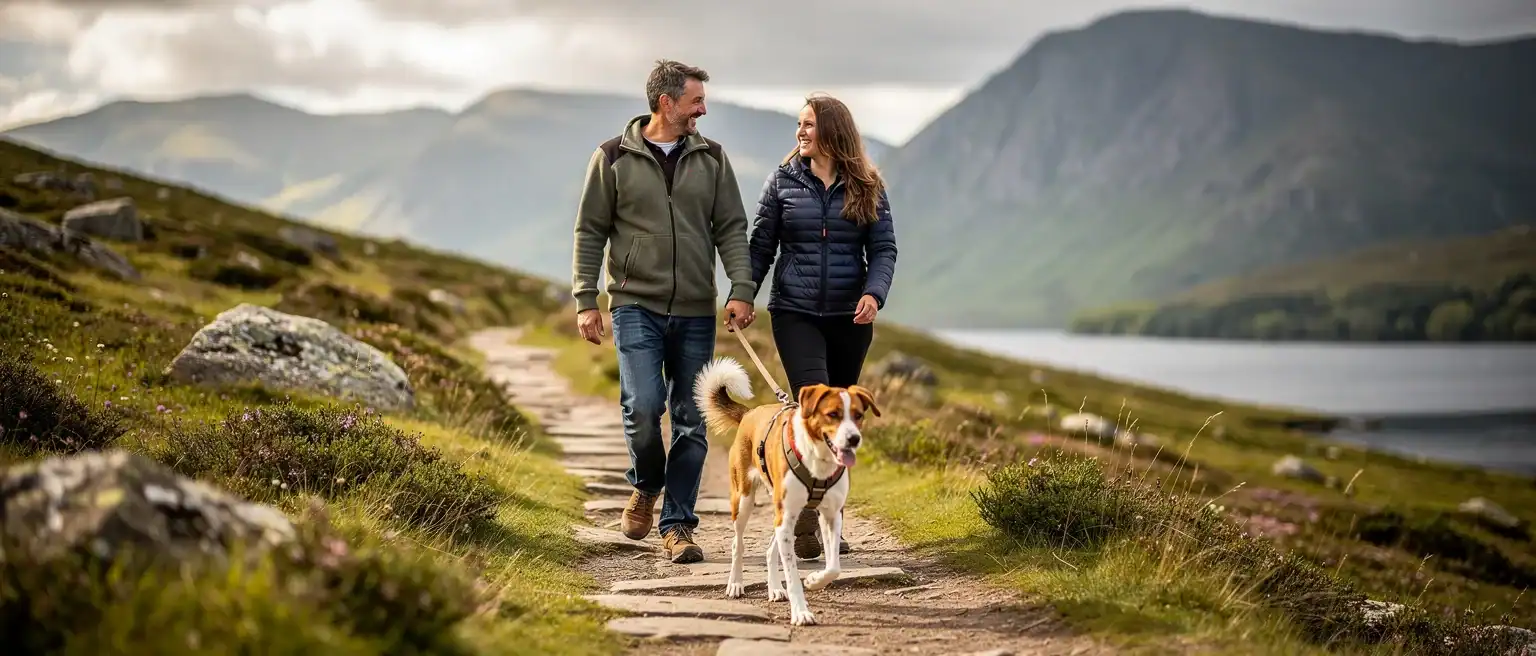
Why Scotland Works So Well for Dog Owners
Scotland has fewer restrictions on dogs in public spaces than many parts of England and Wales. The Land Reform (Scotland) Act 2003 gives walkers, including those with dogs, a legal right of responsible access to most land. That means vast stretches of countryside, coastline, and woodland are genuinely open to you.
The Solway Coast in southern Scotland is a good example. Long sandy beaches, big skies, and low visitor numbers outside summer mean your dog can actually run and swim without constant negotiation. Many Scottish beaches allow dogs year-round, unlike English resorts that ban them from May to September.
The climate is cooler too. That matters more than people think. Hot pavements and crowded promenades are tough on dogs. Scotland keeps things manageable for most of the year.
Choosing the Right Accommodation
Dog friendly does not mean the same thing everywhere. Some places say they allow dogs but charge a large fee, restrict the rooms you can use, or expect your dog to stay in a kennel rather than with you. Always read the small print before you book.
Caravans and holiday park lodges tend to be more practical for dog owners than hotels. Your dog stays with you, you have outdoor space right outside the door, and you are not worrying about wet paws on hotel carpets or noise in shared corridors.
Static caravans on holiday parks can work especially well. Many Parkdean Holiday Parks, for instance, are set up for families and pets, with grass areas and quick access to coastal paths. Check whether the specific caravan or lodge is pet approved, because not every unit on the same park will accept dogs.
Look for accommodation that confirms dogs can be left unattended for short periods if needed, provides outdoor washing facilities or a hose point, and sits close to proper walking routes rather than just a patch of grass.
Getting There With Your Dog
Most people drive to Scotland with their dog, and that is usually the simplest option. Your dog travels in a familiar space, you can stop when needed, and you are not navigating pet policies on public transport.
Break the journey up. Stopping every two hours gives your dog a chance to stretch, drink water, and go to the toilet. A full bladder for four or five hours is uncomfortable and can make dogs anxious or destructive in the car.
If you are travelling by train, ScotRail allows dogs on board for free, though they must be kept under control. Busy commuter services in and around Glasgow or Edinburgh can be stressful for nervous dogs. Quieter rural lines, like the West Highland Line, are far more relaxed.
Flying is not realistic for most domestic UK trips, but if you are crossing from Northern Ireland or taking a ferry to the islands, check the ferry company’s rules carefully. Most CalMac ferries allow dogs on the car deck or outside areas but not in passenger lounges.
Beaches, Walks, and Where to Go
Scotland has a huge variety of terrain. That is one reason dog owners return year after year.
The Solway Coast offers flat, sandy beaches that are good for all breeds and ages of dog. It is less famous than the Highlands, which keeps it quieter. You can walk for miles without crowds, and the tidal mudflats attract incredible birdlife that makes for a genuinely interesting outing even when the tide is in.
The Cairngorms National Park suits more active dogs and owners. Long trail walks, rivers, and pine forests give high-energy breeds exactly what they need. Keep dogs on leads near ground-nesting birds between April and July.
Argyll and the west coast offer a mix of sea lochs, islands, and ancient woodland. Villages like Inveraray and Tarbert are small and quiet, and most of the surrounding countryside is open access land.
Always carry a lead even on open hillsides. Livestock are everywhere in rural Scotland, and the law is clear that farmers can shoot a dog that is worrying sheep or cattle. One moment of distraction can end badly.
Eating Out With a Dog in Scotland
More pubs and cafes in Scotland accept dogs than you might expect, especially in tourist areas. Outside seating is almost always dog friendly. Inside is less predictable, so it is worth calling ahead or checking Google reviews if it matters to you.
Many Scottish pub gardens have water bowls out as standard in summer. Some places actively advertise dog friendly interiors with treats at the bar. These are worth seeking out because they make a full day out much easier.
If you are self-catering in a caravan or lodge, cooking for yourself removes the worry entirely. You can time meals around your dog rather than the other way around, and there is no anxiety about leaving a wet dog tied up outside while you eat.
Keeping Your Dog Safe on Holiday
A change of environment brings new risks. Beaches with strong tides, unfamiliar plants, and different wildlife all need a moment’s thought before you let your dog off the lead.
Blue-green algae is a serious hazard in Scottish lochs during warm weather. It looks like green paint or foam on the water surface. Dogs that drink or swim in affected water can become seriously ill within hours. Always check local warnings before letting your dog swim in a loch.
Ticks are common in Scottish woodland and moorland. Check your dog thoroughly after every walk in long grass or heather. A tick remover tool is cheap and worth keeping in your bag. Speak to your vet about tick prevention treatments before you go.
Make sure your dog is microchipped and wearing an ID tag with a current phone number. If your dog gets lost in a rural area, a tag with a working number is the fastest way to get them back. Having a good photo saved on your phone also helps if you need to ask locals for help.
What to Pack for Your Dog
You do not need to overpack, but a few specific items make a real difference. Bring enough of your dog’s regular food for the whole trip because switching food suddenly causes digestive upset. A portable water bowl and a bottle of tap water for car journeys are essential.
A long line, around ten metres, gives your dog more freedom than a short lead in open spaces while keeping you in control near roads or livestock. A towel you do not mind ruining is invaluable after beach walks. And a basic first aid kit for dogs, including antiseptic wipes and bandages, is worth having in the car even if you never use it.

Comment (0)